
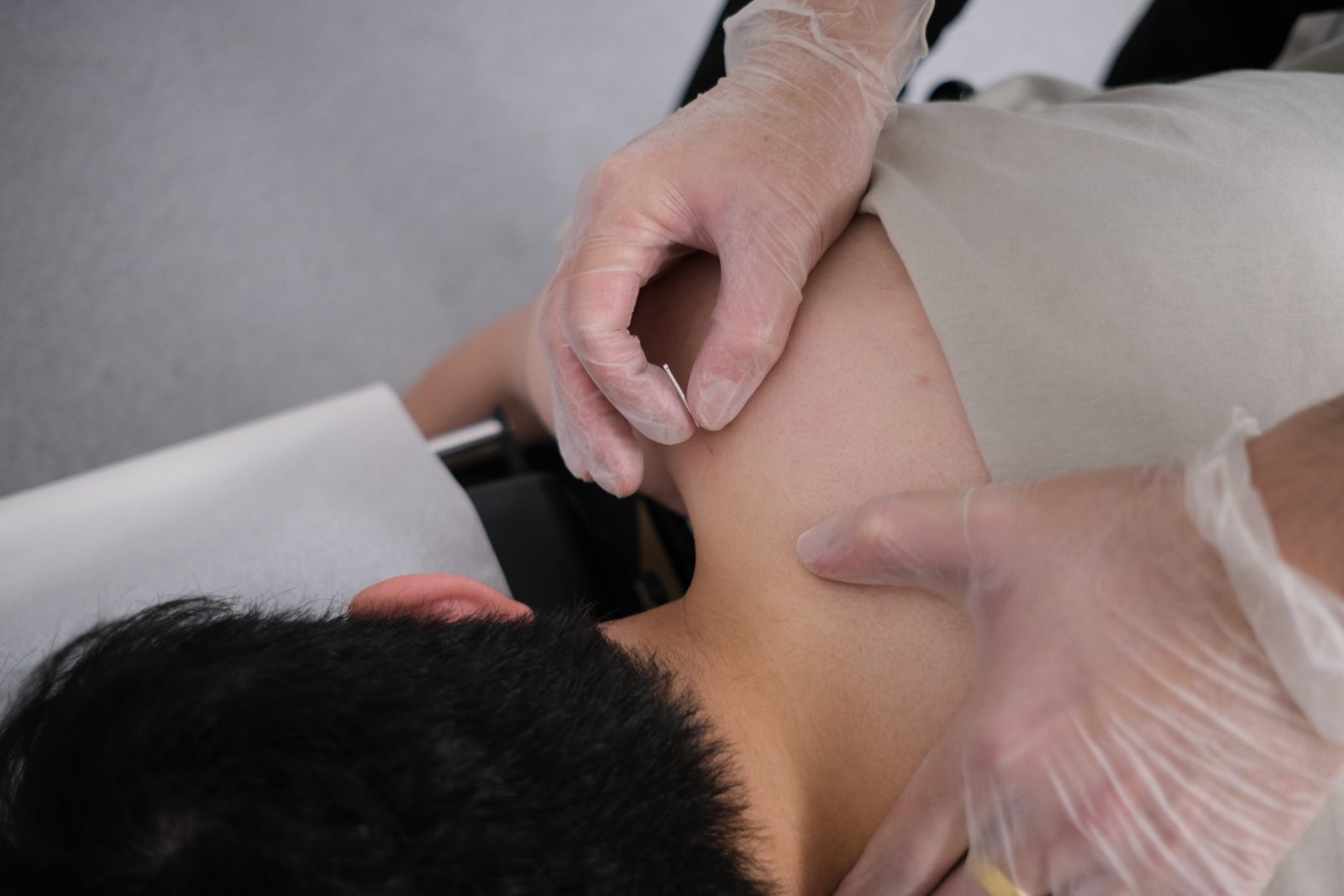
Dry Needling
Dry needling uses fine, sterile needles to release tight muscle trigger points that keep pain and stiffness coming back. At our clinic it is used alongside adjustments for stubborn neck, shoulder, back and sports complaints.
Benefits of dry needling
Directly deactivates the tight bands of muscle that refer pain elsewhere.
Often gives noticeable change within one or two sessions for acute muscle pain.
Releasing shortened muscle restores movement that stretching alone will not.
The local response brings blood flow to tissue that has been chronically tight.
Treating the muscular driver helps adjustments and rehab hold for longer.
A hands-on option that does not rely on medication for symptom control.
What is dry needling?
A thin filament needle is inserted directly into a tight band of muscle — a trigger point. The needle is “dry” because nothing is injected. The muscle usually responds with a brief twitch and then releases, which reduces local pain and restores normal length and blood flow to the tissue.
Dry needling targets musculoskeletal trigger points identified on physical examination. It is a Western technique with a different framework to traditional acupuncture, even though the needles look similar.
What does it feel like?
Most people feel a small prick as the needle passes the skin, then a deep ache or brief cramp as the trigger point releases. That sensation settles within seconds. Some muscle soreness for 24–48 hours afterwards is normal and usually eases with movement, heat and water.
Single-use sterile needles only, disposed of immediately. Your chiropractor will screen for anything that makes needling unsuitable before starting.
What we use it for
Dry needling is most useful where muscle tension is driving the problem: tension headaches from the upper neck, shoulder and rotator cuff pain, low back and glute tightness, calf and hamstring complaints in runners, and jaw tension. It is often the piece that makes an adjustment hold.